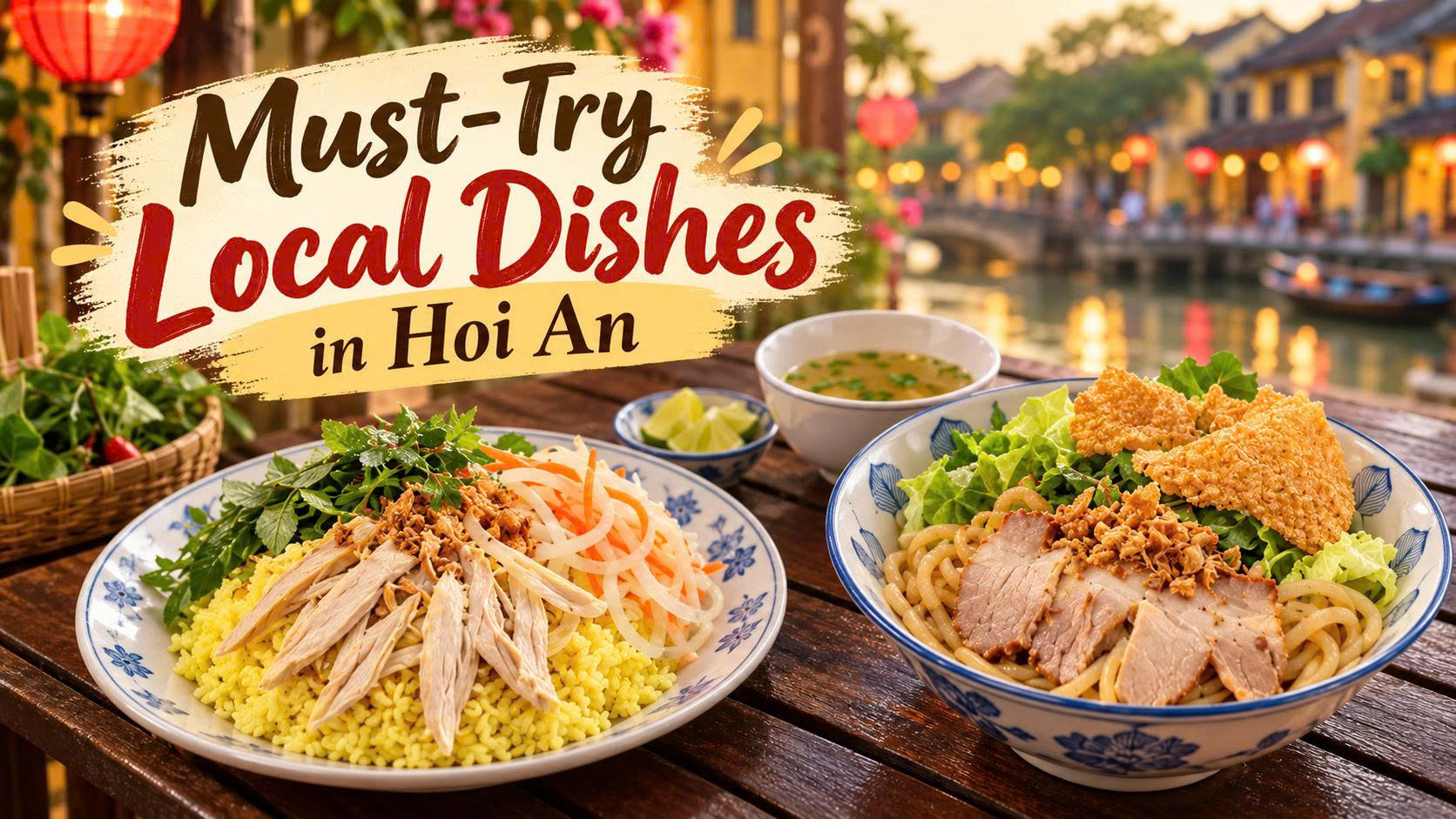
If you are choosing what to eat in Hoi An for the first time, start with Cao Lau and Hoi An chicken rice. They are two of the clearest introductions to the city’s food, while White Rose dumplings, Banh Mi, Banh Xeo, Mi Quang, and the rustic combination of Banh Dap with Cam Nam clams reveal other sides of local and Central Vietnamese cooking.
This guide explains what each dish is, what it tastes like, and how to build a practical food itinerary. It is a guide to must-try local dishes in Hoi An, not a claim that every dish listed is available at one restaurant. At Com Ga Hoi An 5612, we currently serve two dishes from this guide: Hoi An chicken rice and Cao Lau.
Hoi An local dishes at a glance
| Dish | What to expect | Good choice when |
|---|---|---|
| Hoi An chicken rice | Fragrant yellow rice, chicken, herbs, papaya and soup | You want a complete rice meal |
| Cao Lau | Firm noodles, char siu pork, greens, crunchy toppings and a small amount of sauce | You want a dish closely associated with Hoi An |
| White Rose dumplings | Soft steamed rice-flour dumplings with a savoury filling | You want a lighter snack or shared plate |
| Banh Mi | A crisp baguette filled with savoury ingredients, herbs and vegetables | You need a quick, portable meal |
| Banh Xeo | Crisp savoury pancake eaten with greens, rice paper and dipping sauce | You enjoy wrapping and sharing food |
| Mi Quang | Wide noodles, protein, herbs, peanuts, rice cracker and a little broth | You want a Quang Nam noodle dish |
| Banh Dap and Cam Nam clams | Crisp and soft rice paper paired with seasoned clams | You want a rustic Cam Nam food experience |
1. Hoi An chicken rice (Com Ga)
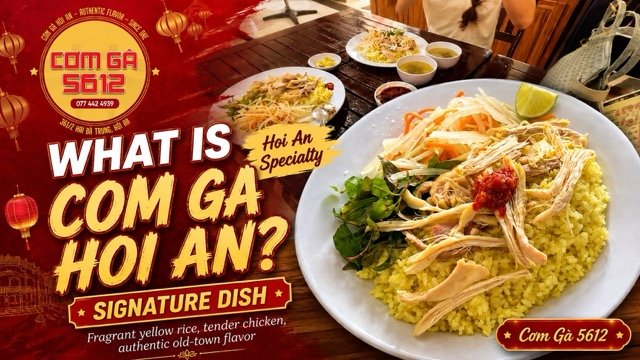
Hoi An chicken rice is a composed rice dish built around fragrant yellow rice, chicken and fresh accompaniments. At our restaurant, the shredded-chicken version comes with rice cooked using chicken broth and chicken fat, turmeric, onion, Vietnamese coriander, sweet-and-sour shredded papaya, and a small bowl of savoury chicken soup.
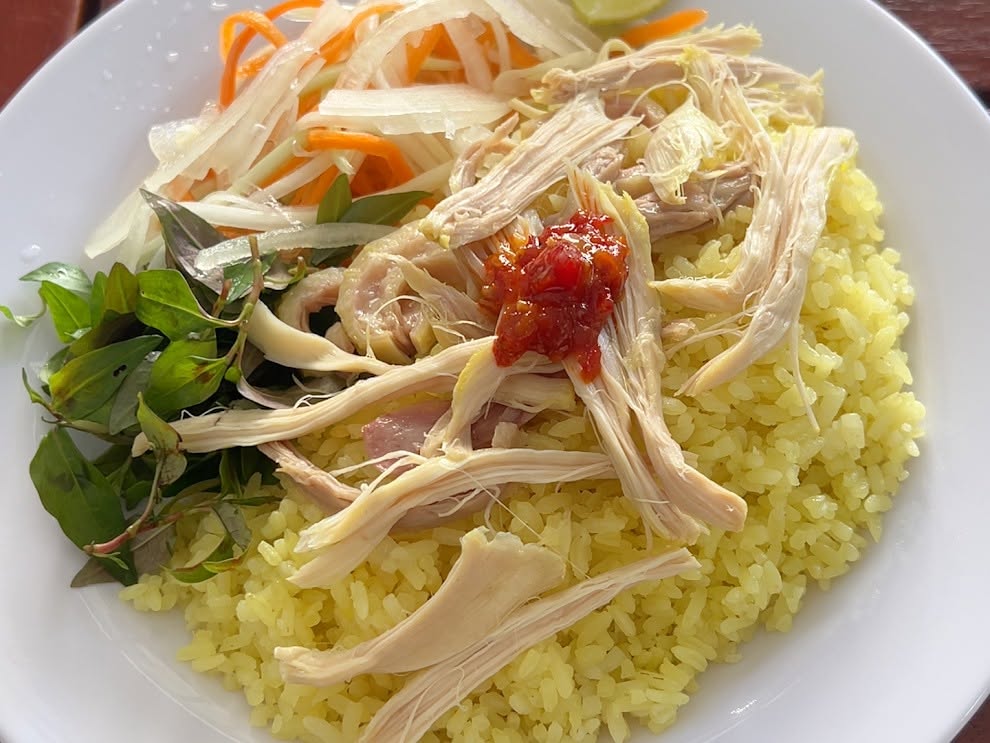
The rice is not simply plain steamed rice placed next to chicken. Its colour, aroma and savoury flavour are part of the identity of the dish. The herbs and papaya add freshness, while the accompanying soup gives you another way to balance each mouthful.
For a closer look at the ingredients and how to eat it, read What Is Hoi An Chicken Rice? You can also view the current options on the shredded chicken rice dish page.
2. Cao Lau
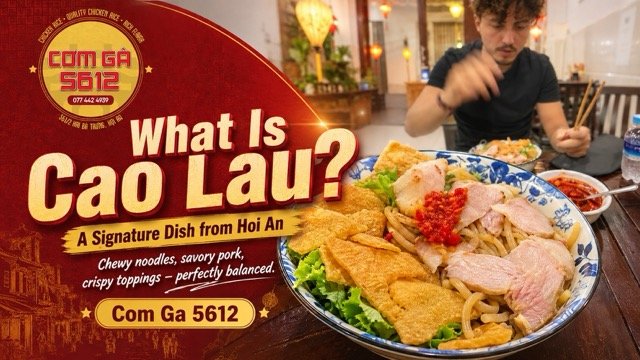
Cao Lau is a Hoi An noodle speciality with firm noodles, char siu pork, greens, crunchy elements and only a small amount of rich sauce. It should not be approached like a large bowl of noodle soup. The appeal comes from mixing contrasting textures in each bite.
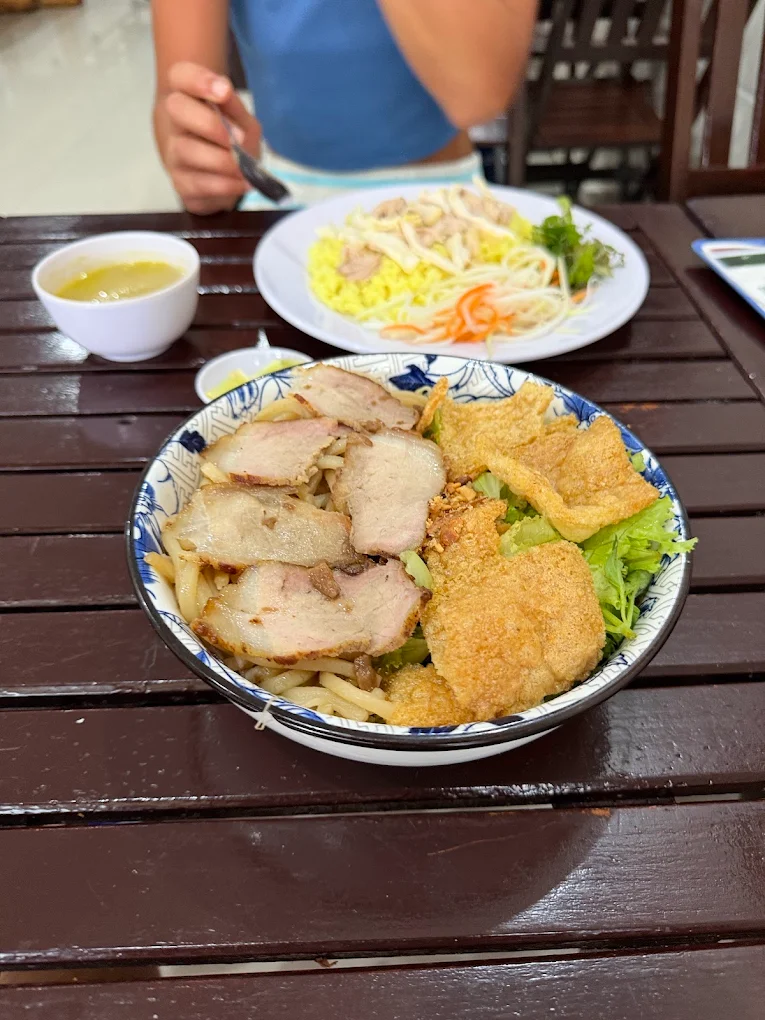
Our Cao Lau is served with char siu pork, crispy wonton crackers, blanched bean sprouts, fresh herbs, fried shallots, peanuts and a savoury sauce. Mix the bowl before eating so the sauce coats the noodles and the toppings are distributed evenly.
Read What Is Cao Lau? for a more detailed explanation, or check the Cao Lau dish page before ordering because availability can change.
3. White Rose dumplings (Banh Bao Banh Vac)
White Rose dumplings are delicate steamed rice-flour dumplings known for their pale, flower-like shape. They are usually served as a snack or shared dish rather than a heavy main meal.
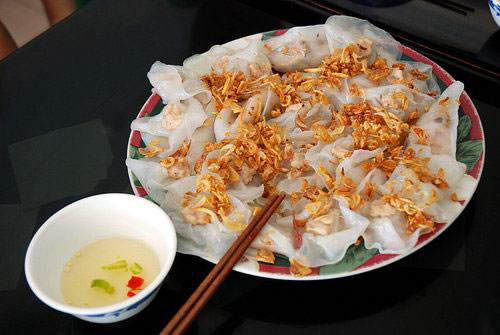
The soft wrapper and savoury filling are commonly balanced with fried shallots and dipping sauce. Because the portion and filling can vary, ask the vendor what is included if you avoid pork, shrimp or other ingredients.
4. Banh Mi
Banh Mi is Vietnam’s baguette sandwich: crisp outside, airy inside and filled with a mix of savoury ingredients, herbs, vegetables and sauce. In Hoi An, it is one of the easiest foods to fit between sightseeing stops.
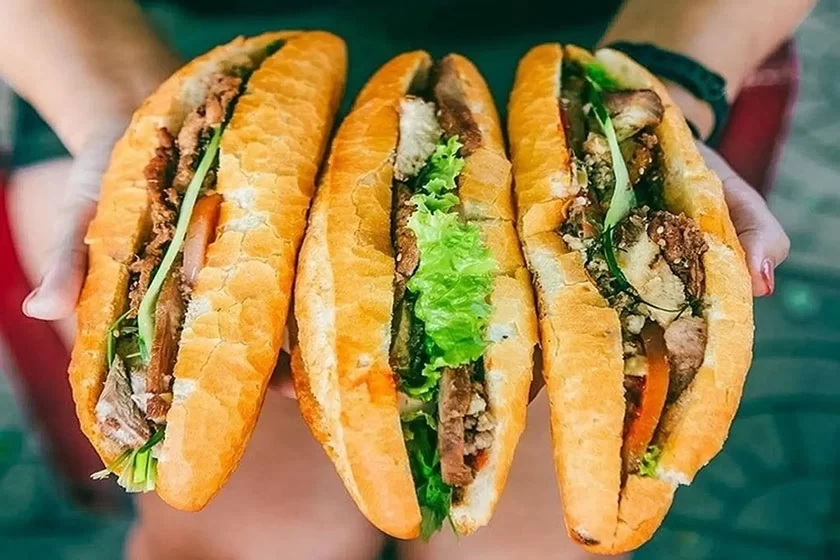
There is no single universal filling. Meat, pâté, egg and vegetarian combinations are all possible, so check the menu instead of assuming every Banh Mi is the same. It works well for breakfast, a quick lunch or a lighter evening bite.
5. Banh Xeo
Banh Xeo is a thin, crisp savoury pancake typically eaten with herbs, greens, rice paper and dipping sauce. The name refers to the sizzling sound made when batter hits a hot pan.
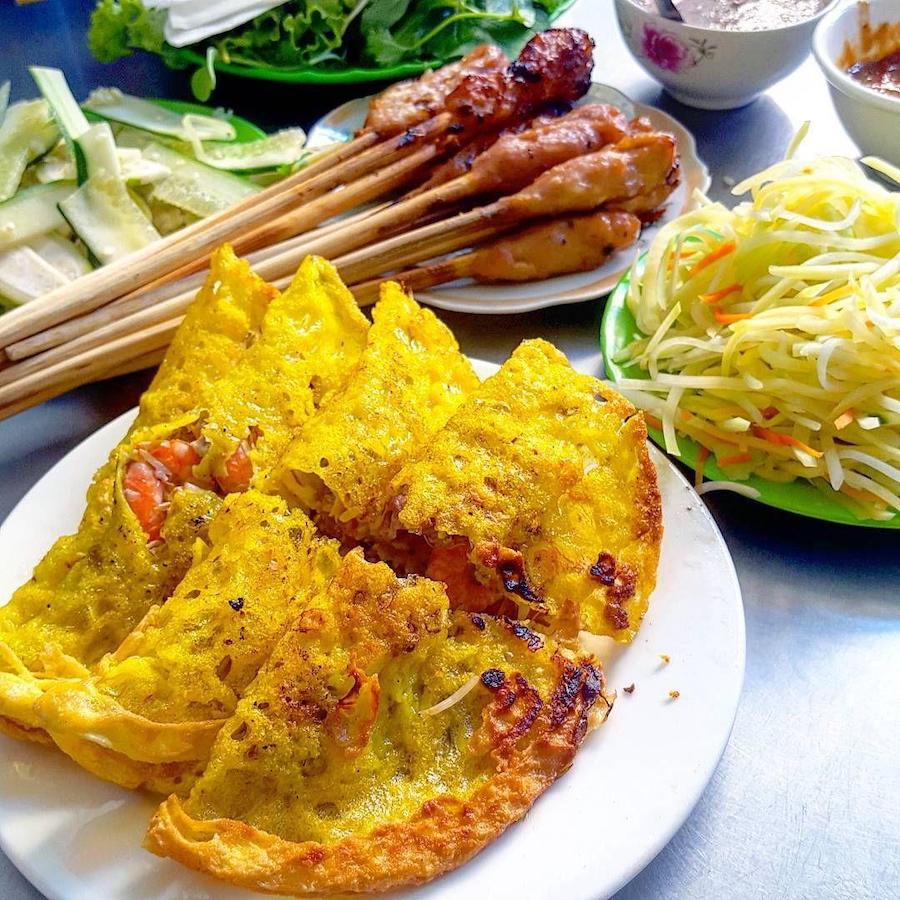
Break off a manageable piece, add greens and herbs, wrap it if rice paper is provided, then dip it in the accompanying sauce. It is especially suitable for sharing because everyone can assemble their own bites.
6. Mi Quang
Mi Quang is a Quang Nam noodle dish made with wide rice noodles, a small amount of concentrated broth, herbs, protein and crunchy toppings. Like Cao Lau, it is not meant to be a bowl filled to the top with soup.
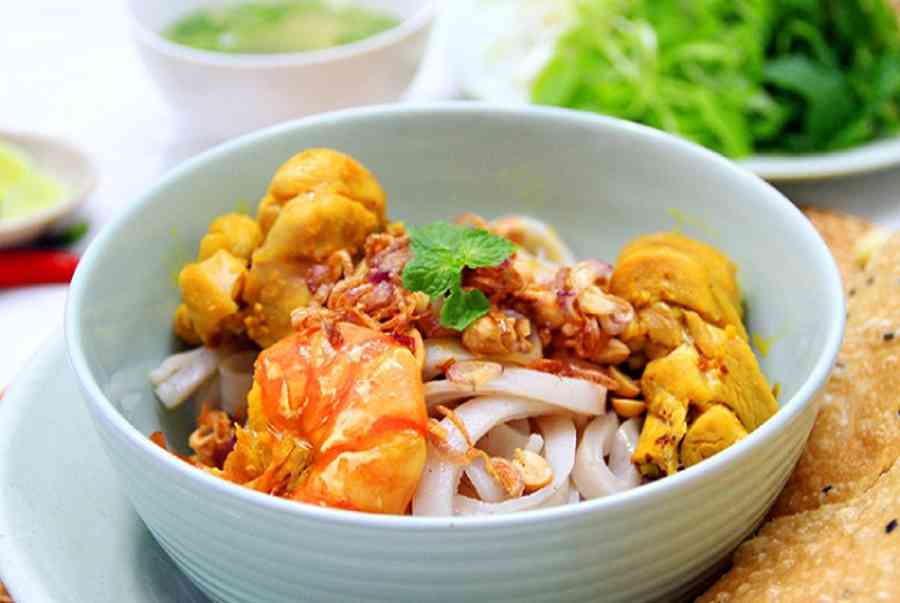
The protein varies by vendor and may include combinations such as pork, chicken, shrimp or egg. Rice cracker, peanuts and herbs add texture. Mix everything before eating so the broth and toppings reach the noodles at the bottom.
7. Banh Dap and Cam Nam clams
Banh Dap combines crisp rice paper with a softer layer, while seasoned clams are another rustic speciality associated with Cam Nam. They may be ordered together to create a meal built around crunch, savoury clams, herbs and dipping sauce.
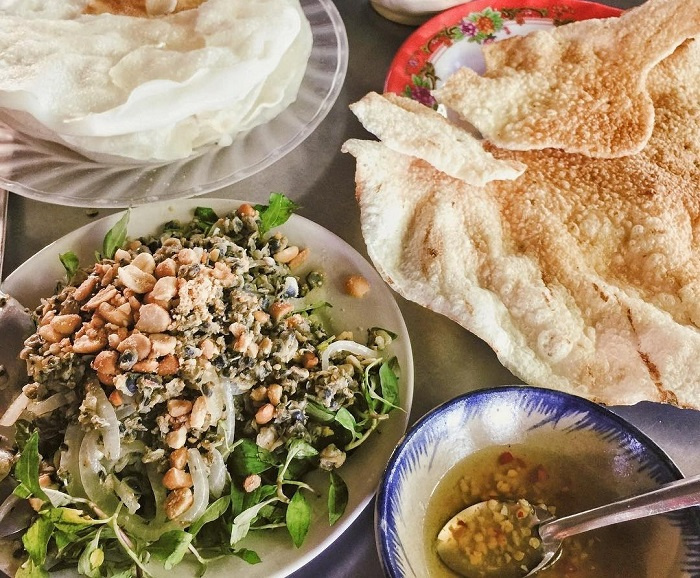
The name Banh Dap refers to the action of pressing or “smashing” the rice paper so it breaks into pieces. Use those pieces with the dipping sauce or to scoop the seasoned clams, depending on how the vendor serves the meal. This is a useful addition to an itinerary if you want to explore beyond the most familiar Old Town dishes.
How to plan a Hoi An food itinerary
Do not try to eat every speciality in one sitting. A better plan is to choose one complete main dish, add one shared snack, and leave another substantial dish for a later meal.
- First lunch: Hoi An chicken rice for a balanced rice-based meal.
- Afternoon snack: White Rose dumplings or a Banh Mi, depending on how hungry you are.
- Dinner: Cao Lau or Mi Quang to explore a noodle dish with only a small amount of sauce or broth.
- Shared local stop: Banh Xeo, or Banh Dap with Cam Nam clams, when travelling with someone who can share several plates.
This sequence is only a practical suggestion. Opening times, portions and dish availability differ by vendor, so check current information before making a special trip.
How to choose a Hoi An street food restaurant or local eatery
Choose by dish, current menu and verified location—not by a long list of “famous” names alone. A market stall, street food restaurant and family-run eatery can offer very different settings while serving equally interesting local food.
- Check recent menu information and prices before ordering.
- Use the business’s official website or verified map listing for directions.
- Ask about ingredients if you have allergies or dietary restrictions.
- For a popular dish, arrive with a second choice because availability can change.
- Choose a format that suits your day: a portable Banh Mi, a full rice meal, or shared dishes.
What can you eat at Com Ga Hoi An 5612?
From the seven foods in this guide, Com Ga Hoi An 5612 currently serves Hoi An chicken rice and Cao Lau. We do not present the other five dishes as items on our menu; they are included to help visitors understand the wider range of Hoi An cuisine.
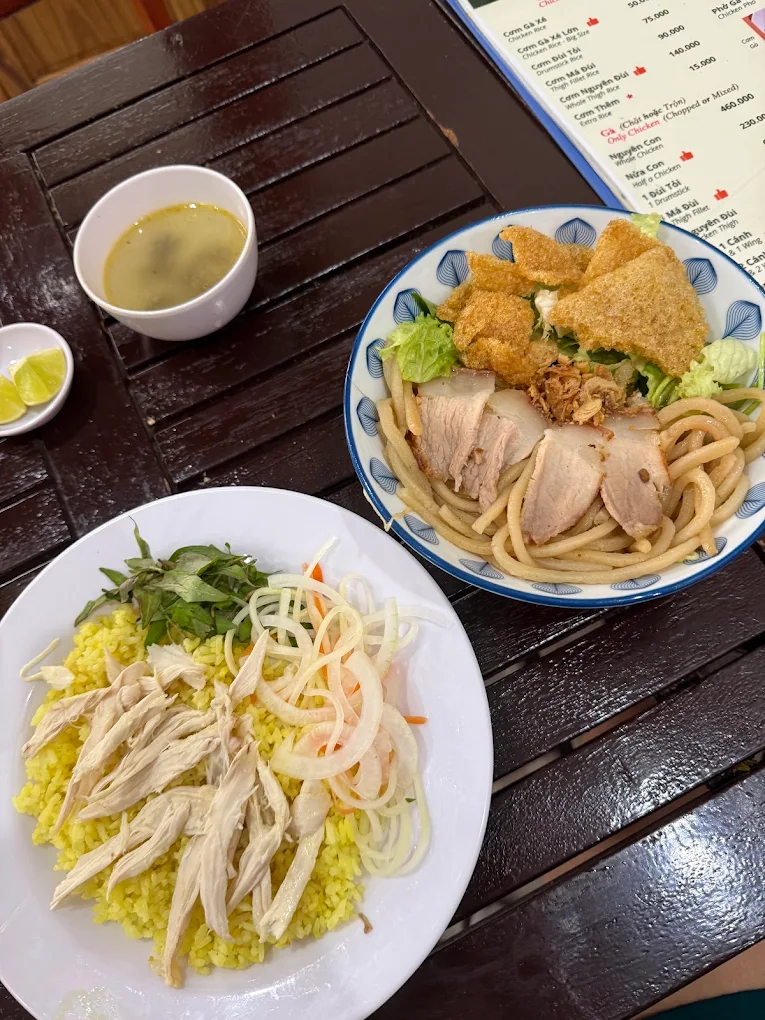
View the official restaurant menu for the latest available dishes. When you are ready, use the official ordering page or check the location and directions before visiting.
Frequently asked questions
What food is Hoi An best known for?
Cao Lau and Hoi An chicken rice are two of the city’s best-known signature dishes. White Rose dumplings, Banh Mi, Banh Xeo, Mi Quang, Banh Dap and Cam Nam clams add more variety to a local food itinerary.
What should I eat first in Hoi An?
Choose Hoi An chicken rice if you want a complete rice meal, or Cao Lau if you want a noodle dish closely associated with the city. Both are approachable introductions for a first visit.
Are all Hoi An local dishes street food?
No. Some are sold at street stalls or markets, while others are served in family-run eateries and restaurants. The dish and preparation matter more than applying one label to every place that serves it.
Does Com Ga Hoi An 5612 serve all seven dishes in this guide?
No. The restaurant currently serves two of them: Hoi An chicken rice and Cao Lau. Check the official menu for current availability before ordering.
Where can I read more about Hoi An cuisine?
For broader cultural context, see the official Vietnam Tourism guide to the food of Hoi An. For the dishes available at our restaurant, use our official menu and individual dish pages.